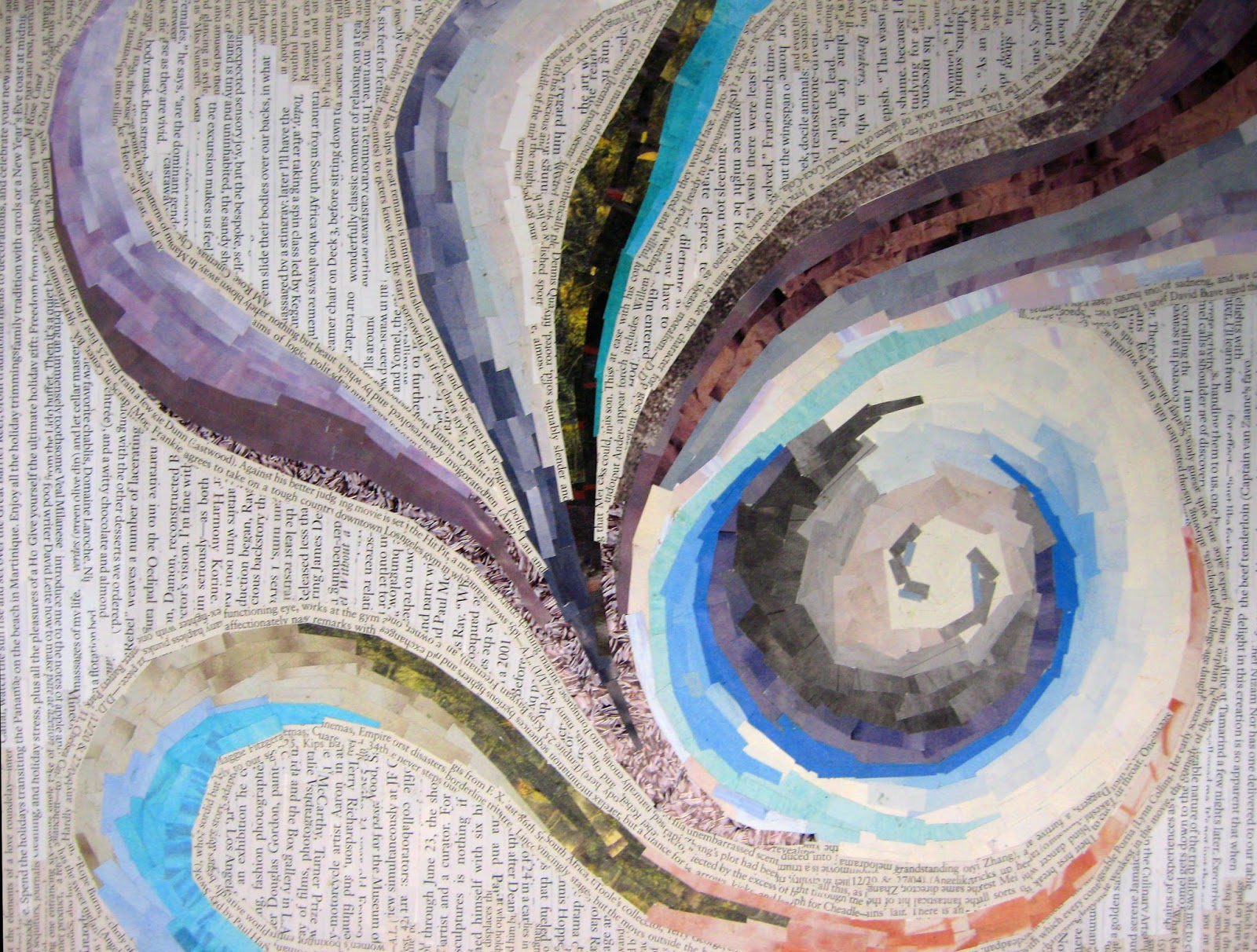
Showing posts with label assemblage. Show all posts

Feb 17, 2020

PROJECT 4 - Deconstructing the 4 Elements of Nature - Type/color/Image/compositions


You will create and depict 2 different typographic and image compositions interpreting two of the four classical elements—earth, air, fire and water.

Air is the element of intellect, study, and book learning. It is also the element of youth, creativity, and spontaneity, and of communication and travel.
Fire is the element of strength and energy. It is also the element of passion, courage, protection, purification, transformation, destruction, chaos, and sex. 
Water is the element of wisdom, clarity, and common sense. It is also the element of emotion, intuition and divination. 
Earth is the element of stability, order and grounding. It is the element of beginnings and endings.

Must be interpreted  in compositions, using harmonious color relations that create visual metaphors. Use your creative problem solving. 

Due Dates:
TUESDAY/THURSDAY CLASS:   Tuesday, February 18th 
MONDAY/WEDNESDAY CLASS:  Wednesday, February 19th 


Materials
• Bristol 9x12” format - 2 compositions
• glue - rubber cement, glue stick, elmer's glue
• scissors and xacto knives and rulers for straight edges
• tons of good magazine images with color and type!

Process
Cut imagery and type from magazines using conceptual thinking of how you would visually interpret the 2 elements you have selected. Again, DO NOT look at imagery and type in the literal sense. treat them as shapes, color, texture and reconstruct an original design. Combine interesting letters forms, sub-heads, paragraphs, etc... as you see fit. bold, medium light. USE HIERACHY OF SIZE, SMALL, MEDIUM, LARGE!  from different sources be aware of variety, flow, how images are seen as texture and how they both work together seamlessly. think layering, integration, thickness and shapes with images to design an appealing collage that conveys the element chosen. It's important to be sensitive to your color combinations, selections of textures and how they work as a whole aesthetically.

Do not use any representational imagery. you should look for color relations, texture, pattern tonal value of the colors. so you must look through the image and consider it for shape and color. Please remember to design your cut outs as well, this has great impact on the aesthetics of the final composition. Be thoughtful about the figure ground relationships, color combinations to create an effective and convincing final product.

Think about different ways to represent your element of choice. How do you see fire, air, water, earth? is it agitated, windy, passionate, arid... Is it tropical, desert, forest, is the water agitated, calm, is the air breezy, hurricane, tornado, etc... , what types of lines, shapes, color, composition, alignment... You need to use the scope of color values that exude the type of feeling you want to convey; you can combine type with images/shapes—but remember that these are typographic and image compositions.

Remember to also be very aware of designing your cuts and shapes. this has to be part of the process to achieve your desired results. Excellent craftsmanship. no sloppy edges or cuts! AESTHETICS ARE IMPORTANT!

Use combination of type as imagery as well as textural cut outs that communicate your goal. The result will be 2 (pick 2 out of 4) interesting and appealing compositions.


Apr 22, 2019

MIXED MEDIA ASSEMBLAGE/COLLAGE PROJECT – DUE DATE- 5/1 + 5/2, 2019

Purpose
Create two mixed-media abstracted portraits or still life on Bristol board or other surface. Think about communicating the essence of your subject's persona and style. think of concept and how you will approach the project. This is not about traditional portraiture or just creating a typical still life, it's an interpretation as well, it's your original, unique vision, but it gives you the freedom to find creative solutions to challenge traditional perceptions. Think abstract, deconstruction, mixed media, collaging, material, overlapping, LAYERING and weaving in your elements in creating a strong compositional solution. use your creative mind and create an affective integrated, cohesive series of TWO works of art that challenge the norm. Intergrate! don't treat your materials as seperates. they all must work together. INTEGRATION, NOT SEPARATION.

Two interpretive pieces either alternative portraiture or still life. Through the process, you will begin to explore additive technique in two-dimensional art. In particular, you will experiment with integrating collaging with traditional painting and drawing techniques. MUST BE VISUALLY PLEASING (good aesthetics please). Think and analyze your process, method of execution and explore creative solutions. Be experimental.

Attention will be given to the design principles we covered first semester. Namely: (framing, Scale, Hierarchy (points of interest/focal areas/emphasis), asymmetry, cropping techniques,  Textural look or feel, F/G relationship, balance, composition, value, contrast and color theory/relationships), color palette, asymmetry. All that we have studied thus far is crucial in creating a cohesive unified solution. How will everything tie in together to create a balanced composition. 

This project is treated as an abstraction and interpretive. Not to be literal. All elements must work together to create a cohesive (unified), resolved, and finished work. Really think about your approach as in theme, style, be selective with materials and how to work them into your composition. Integrate the materials thinking of overlapping, layering, creating transparency in your finished piece. That can be done with different methods of layering mediums. You really need to analyze your piece and be visually aware of your AESTHETICS.

Due Dates (Critiques)
Mon/Wed Class: Wednesday, May 16th. 
Tues/Thurs Class: Tuesday, May 15th. 

Rubric
You will be assessed on your application of the design principles mentioned above, your creative solution, integration of materials, craftsmanship, composition, execution, sketches, and your creativity. 
Note: All projects turned in after the due-date will be reduced by one letter grade. 

Materials

  • Two Sheets of Bristol board or  other surfaces 9" x 12" 
  • Paint, markers, colored pencils, charcoal, watercolors, etc.
  • Fabric scraps, tissue paper, magazine cutouts, string, yarn, newspaper, etc.
  • Appropriate adhesive (white glue, rubber cement, gel medium, sewing kit)

Process

Step 1
In your sketchbook, create 3 different contours (silhouettes) or whatever subject matter you choose that you will use as a reference for your collage. Themes can be a deconstructed portraiture, figurative, still life, abstract environment. BUT ALL ELEMENTS OF MEDIUMS AND MATERIALS MUST BE INTEGRATEAD, WEAVED INTO EACHOTHER, OVERLAPPING, INTERSECTING. MAKE IT A UNIFIED COMPOSITION. NOT COMPARMENTALISED. ELEMENTS MUST BE INTERGRATED NOT SEPERATED. MUST ALL WORK AS A WHOLE! THE SOME OF ALL PARTS. TOGETHER. FLOW, UNITY, COHESIVE. MUST WORK AS A PAIR.

PLEASE STUDY THE LINKS AND ARTIST LISTED. GIVES YOU IDEAS AND RESEARCH MATERIALS. POINTS OF REFERENCE. PLEASE!!!!

Begin by mapping out a theme/concept, think about materials, color palette, MAIN MATERIALS, your layout for both pieces, their relationships. what will crossover be? what is the common ground of your visuals, etc... Pay close attention to details, such as facial features or objects for still life. framing is important! and their relative size and position to one another. Be sure to map all these elements out correctly. Use cropping, scale and position on paper to create a dynamic composition.

Draw a silhouette of the head, then include neck and shoulders, add hair, include ears... Think about what you could add/remove to make it unique (pencil behind ear, sunglasses in hair, specific earring, etc). of course this also applies to a still life and all of its accents. whats the environment? look at Braque and Picasso JOSEPH CORNELL ASSEMBLAGES/collages. 

Process to consider when creating your mixed media composition. Think abstract. Think creative. deconstruct. think of creating focal areas and how your eye travels through the piece. WHAT ARE THE FOCAL AREAS? MAIN SUBJECT, SECONDARY TERTIARY FOCAL AREAS. Must have emphasis. things can't have equal importance on your canvas. there will always be a main subject. can't have everything same size, same value, same anyting. have to keep it DYNAMIC!

Step 2
Focus on other areas of your body as an option- hands, feet, legs, and entire figure. Repeat the steps above, to create 5 more contours from these observational drawings. 

Step 3
Tape the composition to a wall, take a step back, and examine all contours area of composition and theme. Examine the positive/negative space, and composition, of each contour. What is successful. SQUINT.

Now, look at the compositions alongside each other. Pay attention to the different ways the compositions interact with each other. How do they inform (relate and influence) each other? What combinations of compositions are particularly successful? WHAT IS THE FOCAL AREAS? MAIN SUBJECT, SECONDARY TERTIARY FOCAL AREAS. 

Step 4
Based on the observations in Step 3, choose one (or more) compositions to use as a starting point. Find ways to make the composition stronger, by overlapping, intersecting, combining, cutting, cropping, sewing stitching, glueing, etc.  Continue to refine the composition by rearranging, adding, and deleting elements.

Step 5
Explore with different materials (paint, collage, markers, fabric, metal, etc), continuing to refine the composition. Use color, texture, and value to tie everything together. 

NOTE: THIS IS NOT A 3-D PROJECT; KEEP THE WORK 2-D.It can have lots of texture,  alittle relief 1/8" and some depth, but the base board must be able to physically support all the materials you have incorporated. 

Research the words: Assemblage, Mixed-Media, Collage. below are other references.

Art-Historical Examples


Students Samples