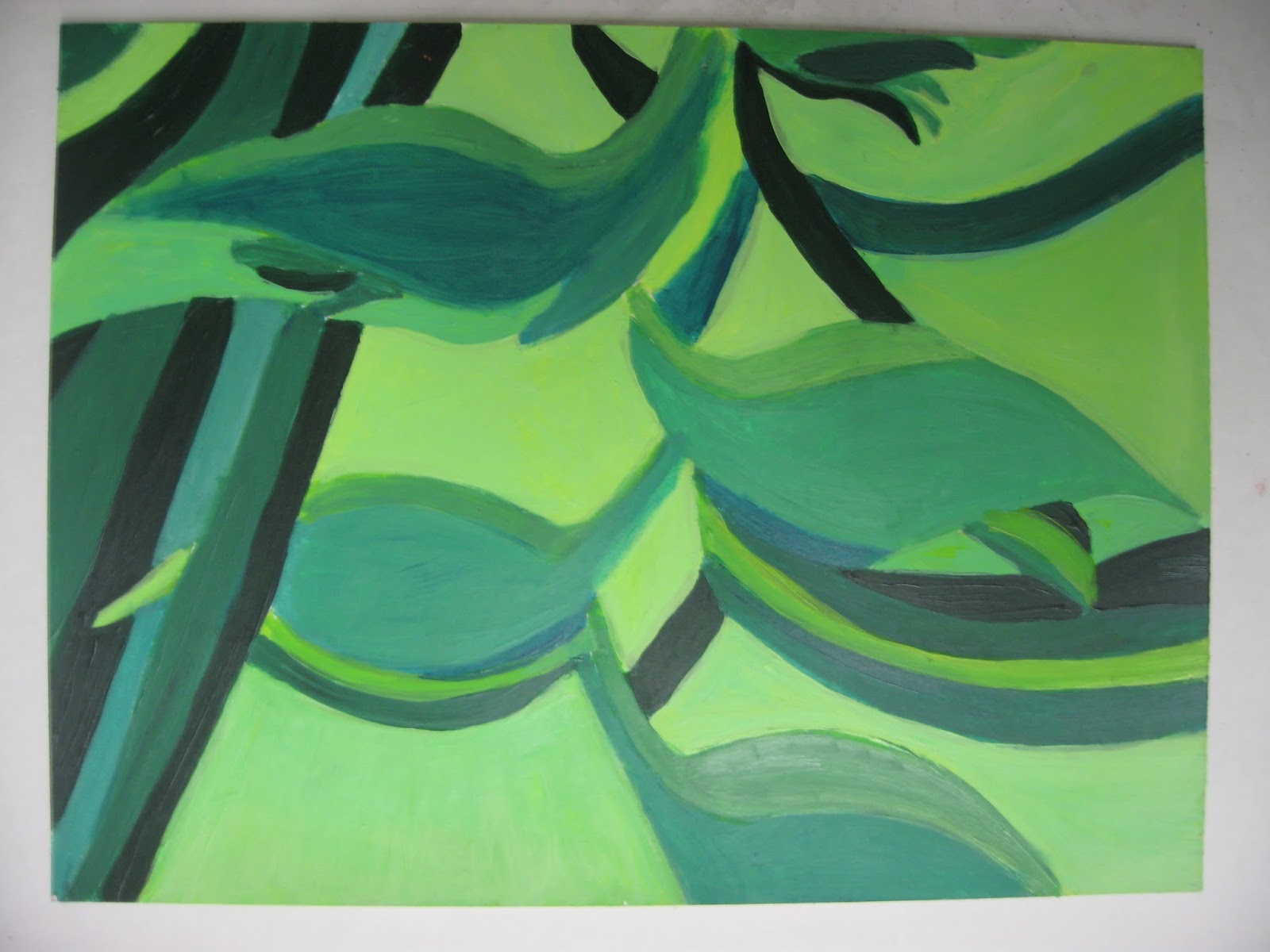
Showing posts with label triad. Show all posts

Oct 18, 2021

COLOR RELATIONSHIP COMPOSITIONS USING COLOR WHEEL (COLOR THEORY)

 DUE DATES: Monday/Tuesday, October 25th / 26th 

Create a series of two dynamic compositions on 9"x12" paper.  Choose two different combinations from COLOR RELATIONSHIPS on the color wheel for your compositions.  you must use the pure color and its tints (mixing color with white) for value changes and contrast. Please sketch 4 different design directions and select 2 final designs to work on final painting. If you don't have paints, use color pencils, colored markers or oil pastels.

Next: Select 2 different color relationships from the 6 choices below (reference info below). Identify the color relationship and the original hues and write the information on the back of each composition.

Formal color relationships: 
analogous, monochromatic, triad
complimentary, split complimentary, double complimentary

Subject can be interpretive still life (close up) or inspire yourself with images from nature, anything that has interesting details you can reference to build your concepts. You will be required to find a close up of image from nature or other non-representational elements that has detailed areas of interest where you can see different design elements in the shapes of the image. This an abstraction/interpretive composition.

It can be inspired from your own creativity or from the shapes of images that exist in nature. Look at the details. explore, look beyond just the actual image of, i.e…  a flower, leaves, shattered glass, grid systems, water, etc... Deconstruct the shapes and details, make them work together, reconstruct, interpret the shapes and create your own design. Nature has many dynamic shapes that can inspire ideas. Interpret and recreate your own version.

You can use cropping  by forming a rectangle with your hands to focus in and frame your selected areas in the image. The cropping is to show how crop and isolate subject or scaling up or down works in relation to the page size.

When creating compositions think of asymmetry, use variations in size of shapes (small, medium, large), you should use a broad range of values using a little white to create contrast, use flat colors, solid colors. create focal areas, unity, flow, cohesive, Use your judgement on Aesthetics and provide creative visual solutions please. Be creative and inspired.

Select your main hue as starting point and from there, you will see relationships according to the color wheel. YOU must refer to the color wheel and the examples from the different combinations from the color wheel posted from the blog. Go back to the reference material on the color theory chapter of the blog. YOU MUST LEARN THE COLOR WHEEL AND ALL ITS RELATIONSHIPS.

Start anywhere on the color wheel, Select a key color. but you must respect the color relationships that are created from the main hue chosen. DO NOT deviate from the color selections. DO NOT use black. you can only use white to shift the values of hues. Where do the colors fall when using each relationship. you are to stick to them but can use pure color and incorporate tones and tints of that particular hue.

    - Complimentary colors
    - Split Complimentary colors
    - Double Complimentary colors
    - Analogous colors - Colors next to each other on the color wheel
    - Monochromatic colors
    - Triad

RUBRIC:
You will be graded on understanding of how to use color wheel and and it's color relationships, creativity, aesthetics, craftsmanship, use of color variations, use of values, hierarchy of shapes in your design, harmony within the composition. Clean edges, solid, flat colors, no blending, clean edges, Clean brush strokes. Be clean and neat.

Materials
• White Bristol 9”x12” format (4 final repeating paintings)
• DO NOT USE BLACK. you can use white to create shift in value.

Check Georgia O’Keefe's work

Students Samples:

Focus on the individual compositions. look at repetition and the different color selections and how they are used. This is past work from prior 9th grade classes. Study them.


IMPORTANT: You will be responsible for an additional series of three 9"x12" during the holiday break. Both series of 3 designs will be presented for JURIES.


Nov 7, 2017

PROJECT 07 - COLOR RELATIONSHIP COMPOSITIONS USING COLOR WHEEL (COLOR THEORY)

DUE DATES: 
Wednesday/Thursday, November 15th /16th 

IMPORTANT: You will be responsible for an additional series of three 9"x12" during the holiday break. Both series of 3 designs will be presented for JURIES.

Create a series of three dynamic compositions (3 of the same). Select 3 different combinations of COLOR RELATIONSHIPS from color wheel for your compositions. You will find the descriptions below from the links provided. Composition will remain the same on all three. Changes will happen with the selection from three of the six different color combinations. 

Next: Select 3 color relationships from the 6 choices below (info provided from links and reference info below). Identify the color relationship and the original hues and write the information on the back of each composition with your name: 

Formal color relationships: analogous, monochromatic, complimentary, split complimentary, double complimentary, triad.

Inspire yourself with images from nature, anything that has interesting details you can reference to build your concepts. You will be required to find a close up of image from nature or other non-represntational elements that has detailed areas of interest where you can see different design elements in the shapes of the image. This an interpretive composition. Use this as your blueprint to draw from. It can be inspired from your own creativity or from the shapes of images that exist in nature. Look at the details. explore, look beyond just the simple image of, i.e…  a flower, leaves, shattered glass, grid systems, etc... Deconstruct the shapes and details, make them work together, reconstruct, interpret the shapes and create your own design. Nature has many dynamic shapes that can inspire ideas. Interpret and recreate your own version. You can use cropping L's or form a rectangle with your hands to focus in and search for select areas in the image. The cropping is to show how scale works in relation to the page size which is 9"x12". Look beyond the actual literal image and use the shapes to elaborate on your ideas for your drawing. Be creative and inspired. Again, variations in size of shapes, create focal areas, unity, flow, cohesive, deconstruct, interpretive, flat colors, solid colors, use contrast in size of shapes, focal areas, scale, broad range of values. Use your judgement on Aesthetics and provide creative visiual solutions please.

THREE (3) Color Relationship Studies will be chosen from the Color Wheel. 
ALL questions can be answered from these links below.
PLEASE READ AND RESEARCH!


Create three repetitive compositions on 9”x 12” paper using the three different color relationships from the color wheel. Repeat same composition on each one. Using paints, execute your compositions using your chosen color relationships, use the pure saturated colors and their shades, tones and tints. you may use white to lighten or desaturate the colors (muted colors).

To choose your color relationship, you will select your main hue as starting point and from that point, you will analyze and develop its relationships according to the color wheel. YOU must refer to the color wheel and the examples from the different combinations from the color wheel posted from the blog. Go back to the reference material on the color theory chapter of the blog. YOU MUST LEARN THE COLOR WHEEL AND ALL ITS RELATIONSHIPS.

Start anywhere on the color wheel, but you must respect the color relationships that are created from the main hue chosen. DO not deviate from the color selections. Where do the colors fall when using each relationship. you are to stick to them but can use pure color and incorporate tones and tints of that particular hue.

    - Complimentary colors
    - Split Complimentary colors
    - Double Complimentary colors
    - Analogous colors - Colors next to each other on the color wheel
    - Monochromatic colors
    - Triad

 Process / RECAP

•  Sketch out 4-6 different thumbnails for your desired composition. as many sketches needed to find
   the right solution for your painting. Experiment with pencil and play with color (color pencils or
   paint or watercolor) in your sketchbook so you can explore and figure out how the different
   relationships work together. Map out your sketch with light pencil drawing to insure placement
   of hues.
•  Write down your 3 final color relation selections and their proper color.
•  Select the strongest composition to execute your final 9”x 12” painting.
•  Consult with teacher for final selection of strongest concepts.

Again you will be graded on understanding of how to use color wheel and and it's color relationships, creativity, aesthetics, craftsmanship, use of color variations, use range of values, hierarchy of shapes in your design, harmony within the composition. Clean edges, solid, flat colors, no shading, Clean brush strokes. Be clean and neat.

Materials
• White Bristol 9”x12” format (3 final paintings)
• Paint with a wide range of values from the pure saturated colors including the tints tones and shades. All solid, flat colors. no blending. clean, well defined shapes. be aware of clean edges. clean shapes.

Check Georgia O’Keefe's work

Students Samples:

Focus on the individual compositions. look at repetition and the different color selections and how they are used. This is past work from prior 9th grade classes. Study them.


Dec 6, 2015

PROJECT 08 - COLOR RELATIONSHIP COMPOSITIONS USING COLOR WHEEL (COLOR THEORY)

DUE DATES: 
Monday/Tuesday, December 14th and 15th

IMPORTANT: You will do another series of three 6"x6" during the holiday break.
Both series of 3 designs will be presented for JURIES.

Create a series of 3 dynamic compositions (3 of the same). SELECT 3 DIFFERENT COLOR RELATIONSHIPS FROM The COLOR WHEEL FOR EACH ONE. Composition stays the same. color combinations change on each 6x6 drawing. 

Select 3 color relations out of 5 choices below. Identify the color relationship and the original hue and write the information on the back of each composition: 
analogous, monochromatic, split complimentary, double complimentary, triad.

Select an image or close up of image from nature that has detailed areas of interest where you can see different design elements in the shapes of the image. composition can be inspired from your own mind or inspired from the shapes of images that exist in nature. Look at the details. explore, look beyond just the simple image of, i.e…  a flower. Deconstruct the shapes and details, make them work together, reconstruct, interpret the shapes and create your own design. Nature has many dynamic shapes that can inspire ideas. Interpret and recreate your own version. You can use cropping L's or form a square with your hands to focus in and search for select areas in the image. The cropping is to show how scale works in relation to the page size which is 6"x6". Look beyond the actual literal image and interpret the shapes and apply to your drawing. Be creative and inspired.
You will be creating three of the same compositions with 3 different color relationships.

THREE (3) Color Relationship Studies will be chosen from the Color Wheel. 
ALL questions can be answered from these links below.
PLEASE READ AND RESEARCH!


Create three repetitive compositions on 6”x 6” paper using three different color relationships from the color wheel. Repeat same composition on each one. Using paints, execute your compositions using your chosen color relationships, use the pure saturated colors and their shades, tones and tints. you may use white or grays to lighten or desaturate the colors (muted colors). do not over use too much black to drown out the color.

To choose your color relationship, you will select your main hue as starting point and from that point, you will analyze and develop its relationships according to the color wheel. YOU must refer to the color wheel and the examples from the different combinations from the color wheel posted from the blog. Go back to the reference material on the color theory chapter of the blog. YOU MUST LEARN THE COLOR WHEEL AND ALL ITS RELATIONSHIPS.

CHOOSE THREE out of 5 COMBINATIONS OF RELATIONSHIPS: 

Start anywhere on the color wheel, but you must respect the color relationships that are created from the main hue chosen. DO not deviate from the color selections. Where do the colors fall when using each relationship. you are to stick to them but can use pure color and incorporate the shades, tones and tints of that particular hue.

     - Complimentary colors (Split or Double complimentary)
     - Analogous colors
     - Monochromatic colors
     - Triad

 Process / RECAP

•  Sketch out 6-8 thumbnails for your desired composition. Experiment with pencil and play with color
    in your sketchbook so you can explore different relationships and color combinations.
•  Write down your 3 final color relation selections and their proper color.
•  Select the strongest composition to execute your final 6”x 6” painting.
•  Consult with teacher for final selection of strongest concepts.

Again you will be graded on understanding of how to use color wheel and and it's color relationships, creativity, aesthetics, craftsmanship, use of color variations, range of values, hierarchy of shapes in your design, harmony within the composition. Clean edges, solid, flat colors, no shading. brush strokes. Be clean and neat.

Materials
• White Bristol 6”x6” format (3 final paintings)
• Paint with a wide range of values from the pure saturated colors including the tints tones and shades. All solid, flat colors. no blending. clean, well defined shapes. be aware of clean edges. clean shapes.
• Mounted as a series on white or black board, centered, with 1" margins


Check Georgia O’Keefe's work

Students Samples:

Focus on the individual compositions. look at repetition and the different color selections and how they are used. This is past work from prior 9th grade classes. Study them.